Listen my children and you shall hear of the midnight ride of . . . Caesar Rodney. Wait, who? I do not mean to diminish the significance of Paul Revere's midnight ride, nor do I mean any disrespect to Henry Wadsworth Longfellow. But, let me tell you about an amazing American patriot and founding father named Caesar Rodney.
Caesar Rodney signed the Declaration of Independence. I know very little about the fifty-six men who literally risked their lives and liberty twice (once in the vote to declare American independence, and then again when they signed that very document they created to tell the world of their vote.) I can't name all seven dwarfs without Googling them, so my brain absolutely cannot pull out the names of all fifty-six signers of that most important document. I know the Declaration is far more important, and considering my love of our continental history, one might think I could recall at LEAST seven of them. Alas, I could not. That is, up until my summer residence in Delaware. Of course we all know a little something about the big guys: Thomas Jefferson, Benjamin Franklin, John Adams, and Sam Adams. And we all know the big-signature guy: John Hancock. Now I know a little bit more about the three guys from Delaware. This is the story of one of them, Caesar Rodney.
But first, a bit of background, both on Delaware and on the three members of the Continental Congress from there. See, Delaware wasn't even a colony, if that's even the right word, until June 15, 1776. Prior to that date, the three counties that make up Delaware were not even their own government entity, but were instead the three "lower counties" of Pennsylvania.
In 1681, King Charles II gifted William Penn a large hunk of land in the New World. It was compensation for debts the crown owed his father, with the extra benefit of getting the newly-converted, very-enthusiastic Quaker out of England proper. As time progressed, the folks in the southern nudge of Penn's domain, those agrarian people mostly of Swedish and Dutch descent along the Delaware River, decided that they weren't adequately represented by such a distant government. There are tons of reasons for this, and in no way do I mean that William Penn was a poor governor. It's much simpler than that. The people in the "lower counties" just simply didn't have a whole lot in common with their northern neighbors. Penn had a great deal of patience and respect for religious freedom, but the agricultural Dutch, Swedish, & other English who had settled in the "lower counties" just simply did not feel like they had any real stake in the Quaker and more-urban government of Pennsylvania. So, on June 15, 1776 the representatives from "the lower counties of the Delaware Valley" who met in New Castle voted to secede from both Pennsylvania AND England. Among those in attendance as voting delegates were Caesar Rodney, Thomas McKean, & George Read.
George Read is an interesting man in his own right, and worthy of his own essay. He's one of only two people to sign all of the big four documents of American independence - Petition to the King, Continental Association, Declaration of Independence, and Constitution of the United States. He gets full credit as a Founding Father. However, as I've learned, he was, well, let's just say he was lukewarm at best. My take on George Read is that he was an overthinker. He was his own devil's advocate. While he truly believed that the colonies should be independent from England, he did not believe it should happen at that particular time. He believed that the colonies weren't ready and that impulsive men with the power to sway other men were jumping the gun. Specifically, he believed that colonists were ill-prepared to govern themselves, and that colonists were equally ill-prepared to actually pick up arms and go to war for their independence. My personal opinion: he was all-in intellectually, but genuinely afraid to pull the trigger. In all fairness, I might've been too.
Just two short weeks after Delaware's Separation Day (which is still celebrated here) the colonies' delegates were called to Philadelphia to vote on an official, formal separation from the English crown. The time had come for the Continental Congress to decide the future of the colonies. Delaware's three delegates, Thomas McKean, George Read, and Caesar Rodney, weren't strangers. They had all been in public service in some capacity and were all part of Delaware's political scene. Everyone knew that George Read had hedged against separation from England. But remember, that issue had been officially resolved on Separation Day. When they were summoned to Philadelphia in late June of 1776 it was a foregone conclusion that the colony of Delaware would vote for independence. Oh, but that is SO not what happened.
Back to Caesar Rodney. On July 1, 1776 Caesar Rodney was comfortably at home while George Read & Thomas McKean were representing Delaware in Philadelphia. Or maybe uncomfortably. Caesar Rodney most likely had jaw cancer, and he definitely had severe asthma. He wasn't well. Not even remotely well. Knowing that Delaware as an entity had already voted for independence, and knowing that the two other delegates would carry the colony in Philadelphia, he chose to stay home on that most critical voting day. Mistake. In the first vote that day, in what would come to be called Independence Hall in Philadelphia, the Delaware continent was divided. Thomas McKean voted for independence. George Read voted against. The agreement among the men in attendance was that the vote must be unanimous among all the colonies. All or nothing. And now Delaware was unexpectedly undecided, with the official vote a one-to-one tie.
Thomas McKean dispatched a message to Caesar Rodney at home, back down in Delaware. He must come vote. Immediately. The re-vote would happen the next day. New York had abstained because the delegates did not yet have official approval from their colonial government to vote, and Delaware had deadlocked. Independence was at stake. This was important. Incredibly important.
Caesar Rodney understood the urgency. He took off on his horse for Philadelphia. He took off. On an eighty-mile journey. In the middle of the night. On horseback. In a thunderstorm. The guy who was in extreme physical pain, and in extreme respiratory distress, rode the eighty miles to Philadelphia from Dover, Delaware in the pouring rain, in the middle of the night. He arrived the next afternoon, just in time to do what needed to be done. What a sight he must have been - drenched, exhausted, and covered in mud - when he walked into that group of dignified, well-dressed and well-coiffed men. He cast his vote, breaking the Delaware deadlock and squarely putting Delaware on the side of independence. Independence. American independence. The overall vote of the Continental Congress was now unanimous. The colonies as a whole were in agreement. The Declaration of Independence was created, and our history as a nation began.
Thanks, Caesar.
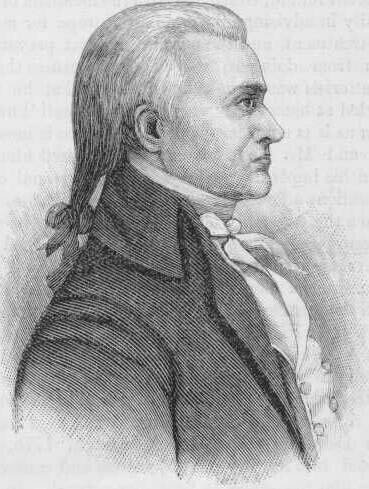
So why haven't we ever heard of this guy? Why is his story overlooked and omitted in our American History textbooks? I have some ideas. Caesar Rodney had a facial deformity, both from the jaw cancer itself and from failed treatments for that cancer. He didn't like the way he looked, so he certainly didn't volunteer to sit for portraits. Only a very few images of him exist, and those that do either show him in profile or with a scarf draped across his face. Likely because of his deformity and his poor physical health (asthma), Rodney wasn't a front-and-center headline grabber. He wasn't the debater; he was the mediator. He wasn't the guy giving emotional speeches to incite his neighbors; he was the guy in the background, quietly doing what needed to be done. In a history.com article, University of Delaware historian Jonathan S. Russ stated that Delaware wasn't a hotbed of political grandstanding at the time, and chief curator of the Delaware Historical Society Lee Rifenberg noted that Rodney was the guy working quietly and steadily on the ground, even paying for troop supplies from his own pocket when needed. In that same history.com article, Mike DiPaulo, executive director of the Lewes Historical Society, said, "when there’s no representations of you and you come from a small state, despite the magnitude of what you did, sometimes it’s easy for your story to be lost among the larger players.” Further, Caesar Rodney never had children. With so few images, almost no headlines, and no direct descendants to keep his story alive, Caesar Rodney is relatively unknown outside the state of Delaware. But, Delaware IS keeping his story alive. His midnight ride is depicted on the Delaware state quarter; a central-Delaware school district is named for him; and even though his actual burial place on his family's land is unmarked, his cenotaph is well-cared-for in the historic Christ Church cemetery in downtown Dover.
All three of the delegates - Caesar Rodney, Thomas McKean, and even George Read - put their lives and liberty at stake when they signed the Declaration of Independence, but Caesar Rodney risked his life and his health to make sure such a declaration could even be made. We should tell his story loudly and often. We need inspiration, a reminder, a feel-good story about what it means to do the hardest, scariest things and succeed. Stories of such bravery, the story of Caesar Rodney, should never be forgotten.
.jpg)
.jpg)
.jpg)
.jpg)